
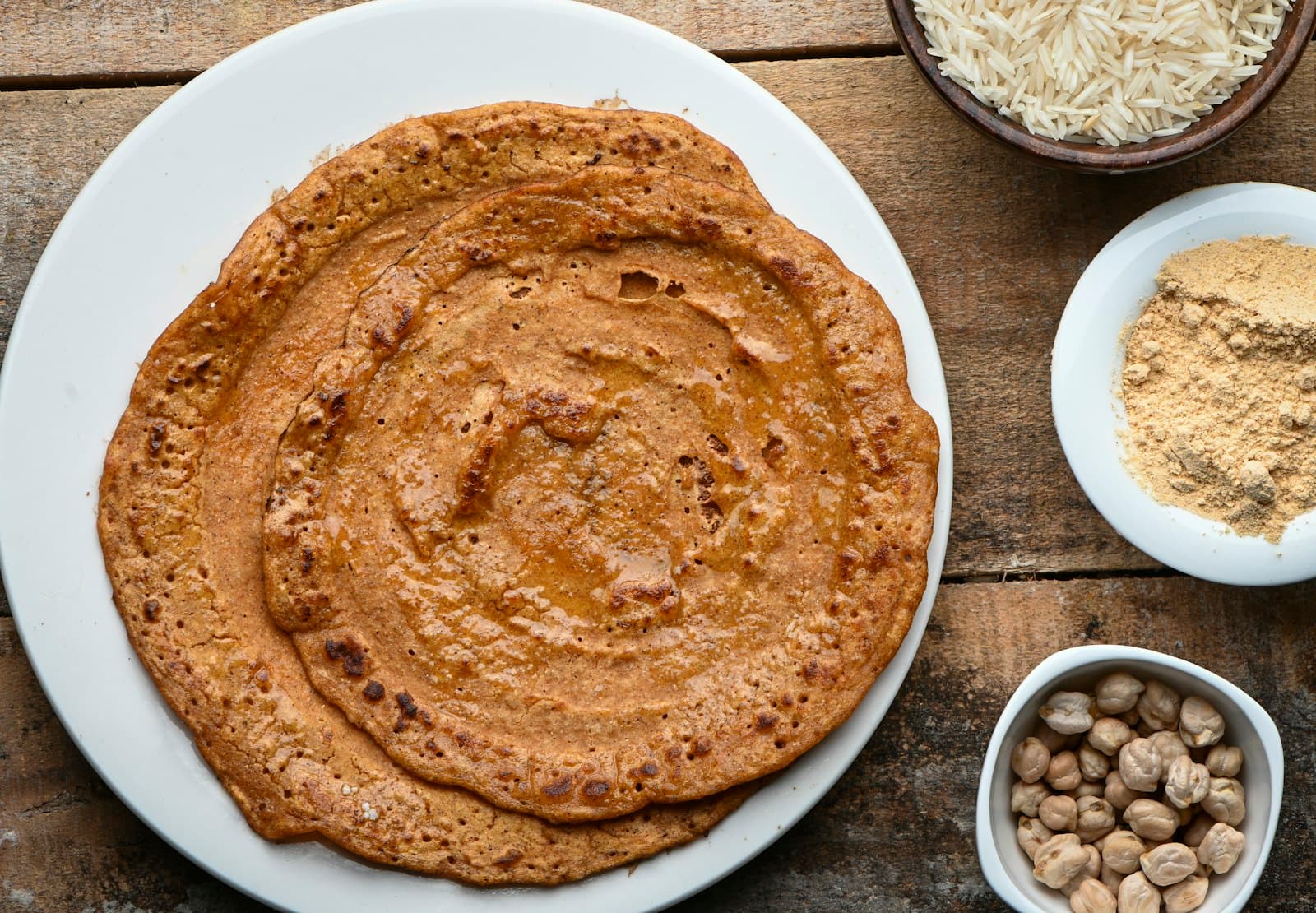
Guide
Meal Planning for Families with Diabetes: An Indian Household Guide
In Indian households, diabetes is a family condition — because everyone eats from the same kitchen. A practical, non-medical guide to planning meals for a household with a diabetic member, with a sample week, grocery list, and cook instructions.
JinKul Editorial ·
This is general meal-planning guidance for households, not individualised medical nutrition advice. Decisions about medication, target blood sugar ranges, and individual dietary restrictions belong with a qualified doctor or registered dietitian. Individual needs vary based on medications, insulin use, activity, age, and underlying conditions. What we cover here is the household workflow of feeding a family when one member has diabetes — not the medical management of diabetes itself.
A diabetes diagnosis in an Indian household rarely affects only the person diagnosed. The dietitian's printout — usually a list of "ideal diabetic foods" lifted from a Western template — assumes the patient will eat separately from the rest of the family. In any Indian home with a shared kitchen and a cook, that assumption falls apart by the second week.
In Indian households, diabetes is a family condition, not an individual one — because everyone eats from the same kitchen.
This guide is about what to actually do when that's true. How to plan a week of meals that work for the diabetic family member and for the teenager who needs calories and for the grandmother who's been eating the same way for fifty years. Without two parallel kitchens, without making one person eat sad food alone, without giving up on Indian cuisine.
Why "a separate diet for the diabetic" doesn't work in Indian homes
Three reasons this approach fails, in roughly this order.
One menu, one cook. Most Indian households cook one menu per meal. Asking the cook to make a parallel set of dishes — white rice for everyone, brown rice for grandfather; full-sugar kheer for guests, sugar-free for the diabetic — doubles the work, doubles the dish count, and reliably collapses within a fortnight. Cooks who tolerate it for the first week stop tolerating it by the third. Family members who tolerate it for the first month start cheating by the second.
The dinner-table problem. Diabetic family members — especially older parents — don't want to feel different at the dinner table. Watching everyone eat hot pooris while you eat a bowl of moong dal is not a sustainable plan, no matter what the GI chart says. It is also unkind, and many households quietly abandon the "separate plate" plan for this reason alone.
The cuisine itself is more flexible than the printout suggests. Most Indian meals are already structured as base + sabzi + carb, where the carb can be modulated (jowar instead of wheat, brown rice instead of white) without changing the rest of the meal. The household doesn't need a new cuisine. It needs a recalibrated version of the cuisine it already cooks.
The right frame, then, is household-level planning with the diabetic member as the strictest-constraint member. This is the same principle covered in our weekly meal planning guide — plan the shared meal around the most-restricted member, then layer personal top-ups for everyone else. With a diabetic in the household, the strictest constraint is total daily carb load. Build for that, then add a paneer cube for the teenager, an extra paratha for the active uncle, a sweeter dessert plate for the toddler on the weekend.
The four levers Indian households actually have
Most diabetes nutrition advice on the internet is a list of "foods to avoid" and "foods to eat." That framing doesn't survive contact with an Indian kitchen, because almost every "food to avoid" (rice, roti, mango, jaggery) is structurally part of how the household eats. The more useful frame is to recognise that you have four levers to pull, and to pull them in combination rather than relying on a single one.
Before going further: individual needs vary depending on medications, insulin use, activity level, age, kidney function, and a doctor's specific guidance. Treat what follows as general household patterns that many families find workable — not a prescription. If something contradicts what your doctor or dietitian has told you specifically, follow them.
Lever 1: Carb composition
What kind of carb shows up on the plate matters more than whether carbs show up at all. The household-friendly moves are: whole-wheat atta instead of maida; jowar, bajra, or ragi rotis in rotation alongside wheat rotis; brown rice or a 50/50 brown-white blend instead of pure white rice; oats or millet upma instead of suji upma at breakfast.
A couple of practical notes: basmati rice is generally considered to have a more moderate glycaemic index than other white rice varieties, but it is still rice — portion control matters more than variety alone. Jowar and bajra rotis taste different from wheat rotis; many households go through a calibration period of two to three weeks before the family stops mentioning it. Multigrain atta from a brand like Aashirvaad is a reasonable starting point if jowar/bajra rotis are a hard sell; pure single-grain rotis are often more supportive but only if they'll actually be eaten.
Lever 2: Carb portion
Many households find that measured portions are easier to sustain than unmeasured ones. Plans often collapse not because of what was on the plate but how much. Two rotis with extra dal and a generous sabzi may help keep blood sugar steadier than four rotis with a thin curry, even if the dal and roti were notionally the "same diet."
Three practical patterns that many households find helpful: pairing the carb with protein and fibre (dal, paneer, vegetables) rather than eating it on its own; portioning rice by cup or katori, not by ladle; keeping the heavier-carb meal at lunch and the lighter one at dinner. Diabetic family members will typically eat smaller carb portions than everyone else; the rest of the household can continue with normal portions.
Lever 3: Cooking method
The same dish can have a meaningfully different impact depending on how it's prepared. Reduce tadka oil to about one teaspoon per dish; the flavour penalty is small once the cook calibrates. Bake or roast where the dish allows — baked pakoras work; baked dosa does not. Use jaggery sparingly: it has roughly the same glycaemic load as white sugar, and "jaggery is healthy" is one of the more durable myths in Indian nutrition advice.
If anyone else in the household has hypertension — a common comorbidity with diabetes in Indian families — a lower salt baseline for everyone is often easier to maintain than parallel preparations. Lower-sodium cooking is generally well-tolerated by non-hypertensive members and can help support the hypertensive one. For the salt-volume side of the workflow specifically, see our hypertension meal planning guide, which uses the same household-level framing.
Lever 4: Meal timing and spacing
For many households, structured meals and planned snacks are easier to manage consistently than unplanned grazing throughout the day. A common pattern that works is three meals with one mid-afternoon snack, finishing dinner a couple of hours before bedtime, and eating breakfast within an hour or so of waking. Consistent timing — whatever timing your family settles into — may help maintain steadier energy and glucose patterns than an irregular schedule.
Protein-led or fibre-led snacks — roasted chana, a small bowl of sprouts, a few almonds, a paneer cube — tend to keep many people fuller and steadier than packaged options. "Diabetic biscuits" are best treated with the same skepticism as other marketing categories; they are usually moderately better than regular biscuits and not as supportive as the protein options at a similar calorie cost.
A sample week
Here is one workable week. Adjust everything to your household's actual diet, region, and the doctor's specific guidance. The diabetic member's portions are the baseline; everyone else gets larger portions or additional dishes layered on top.
| Day | Breakfast | Lunch | Mid-afternoon snack | Dinner |
|---|---|---|---|---|
| Mon | Moong dal chilla + curd | Jowar roti (2), moong dal, lauki sabzi, salad | Roasted chana + tea | Brown rice + rajma + cucumber raita |
| Tue | Vegetable oats upma | Wheat roti (2), bhindi sabzi, dal tadka, salad | Sprouts chaat | Multigrain roti (2), palak paneer, salad |
| Wed | Idli (2) + sambar + chutney | Wheat roti (2), chana masala, mixed veg sabzi | Paneer cubes + chai | Brown rice + sambhar + beans poriyal |
| Thu | Besan chilla + mint chutney | Bajra roti (1) + wheat roti (1), rajma, gobi sabzi | Almonds + green tea | Jowar roti (2), chicken curry (or paneer bhurji), salad |
| Fri | Vegetable poha (less oil) | Wheat roti (2), masoor dal, baingan bharta | Roasted makhana | Brown rice + dal palak + lauki kofta |
| Sat | Sprouts paratha + curd | Brown rice + chicken curry (or paneer butter masala — smaller portion for diabetic member), bhindi sabzi | Cucumber + curd | Vegetable soup + 1 multigrain roti + dal |
| Sun | Masala dosa (1) + sambar | Wheat roti (2), kadhi, aloo-gobi (small portion), salad | Fruit + a handful of nuts | Khichdi (moong dal + brown rice mix) + curd |
Notice what the table is not doing. It is not avoiding rice. It is not banning carbs. It is not making the diabetic member eat differently from the rest of the family. The same dishes appear on the same days; the levers — composition, portion, method, timing — do the work.
Building this kind of plan from scratch each week, calibrated to your family, with the carb load mapped against each member's needs and the cook briefed correctly, is the actual work. JinKul's planner is built for exactly this case — a diabetic member gets a household-level plan automatically, with personalised portion and nutrient calibration for each other member. Try it free for 14 days.
What to actually buy
The plan above translates into a shopping list that most Indian households can assemble on Swiggy Instamart, Zepto, or BigBasket in under fifteen minutes. The shifts from a typical "non-diabetic" cart are smaller than people expect.
Atta and flours. Aashirvaad multigrain or Aashirvaad whole-wheat atta as the base. Add a 1kg jowar atta and a 1kg bajra atta for rotation; if those move quickly, scale up. Skip refined maida-based products (white bread, naan-mixes) entirely if possible.
Rice. Brown basmati (Daawat Sona Masoori, India Gate Brown Basmati) for the diabetic member's portion, regular basmati for the rest of the household. Or buy one brown variety and serve it 50/50 mixed with white if the texture is being resisted.
Dals. Keep four on rotation — moong, masoor, chana, toor — and cycle them across the week. Variety matters more than picking the "right" dal; all of them have a reasonable glycaemic profile.
Vegetables. Most seasonal vegetables are generally suitable. The starchier vegetables — potato, sweet potato, beetroot, corn — may need more portion attention than others. Greens, gourds, beans, cauliflower, and most others are broadly suitable for frequent consumption in normal portions.
Snacks. Roasted chana, plain murmura, makhana, a paneer cube tin, almonds in small portions. "Diabetic biscuits" are best approached with the same caution as other marketing-driven categories — they may be slightly more suitable than regular biscuits, but the protein- or fibre-led options above tend to be more supportive at a similar calorie cost.
Sweeteners. Use jaggery if the family insists on it, but use it the way you'd use sugar — sparingly. There is no carb-free sweetener that is also culturally appropriate for chai or kheer; just reduce quantities.
The full grocery cart for the sample week above runs to about 35–50 SKUs depending on household size. Assembling, deduplicating, and brand-resolving that list manually each week is the work that quick-commerce platforms didn't solve. JinKul's grocery cart handles this aggregation automatically; if you're doing it by hand, expect 30–60 minutes a week of careful attention.
Coordinating with the cook
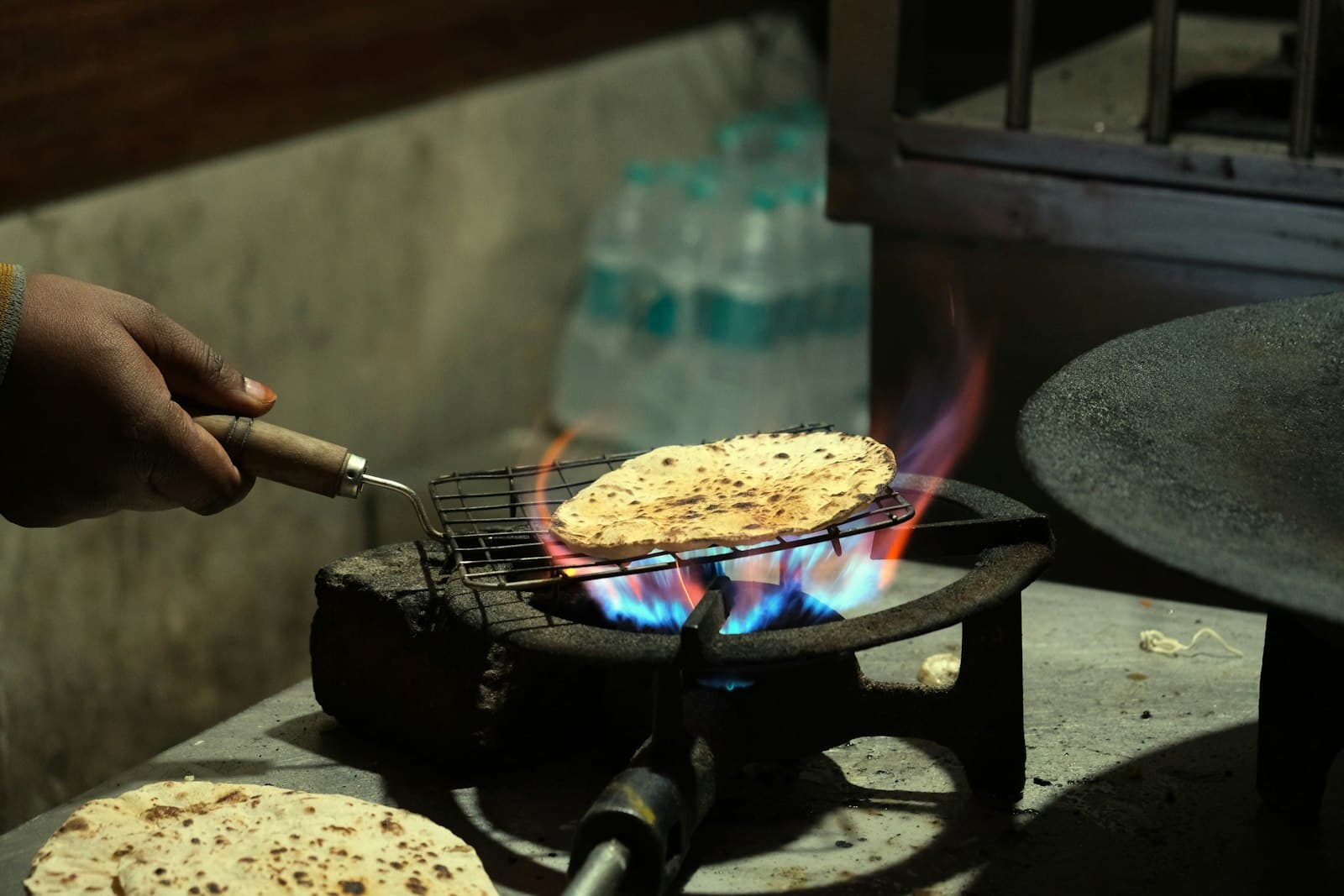
The cook is often where diabetes meal plans quietly fall apart. The plan exists on paper; the cook continues making the food the way they've always made it. If the diabetic member is eating two extra teaspoons of ghee per day because nobody mentioned cutting the tadka, the plan can drift without anyone noticing.
What tends to work better is daily, specific briefing rather than a weekly schedule taped to the fridge — those often drift within a few days, especially when fresh vegetables don't match what was planned. The same pattern we recommend for household meal planning in general (see the weekly meal planning guide) applies here: brief the cook each morning with that day's menu, ingredients, quantities, and specific instructions.
For a household with a diabetic member, the instructions need to be more concrete than usual. "Less oil" means nothing; "one teaspoon of oil for tadka, not two" means something. "Less rice for papa" means nothing; "one katori rice for papa, the rest can take normal portions" means something. "Don't make it sweet" means nothing if your cook's reference for "sweet" is different from yours.
Expect a calibration period of two to three weeks where the cook needs to taste, adjust, and confirm. Most cooks will get there if briefed consistently. If your cook is non-literate or uses a family phone for WhatsApp, lean on voice notes and a simple printed sheet on the fridge; a QR code linking to a per-day recipe page (the pattern JinKul's cook portal uses) works for cooks who are comfortable with web pages but don't install apps.
When to escalate
Meal planning is one lever, not the only one. A few signals that your plan needs review by someone beyond a recipe blog or this guide. If you are already working with a registered dietitian or nutritionist on this, our companion piece on executing a nutritionist's plan in an Indian household covers the workflow side of staying on their plan.
- HbA1c is not improving after 8–12 weeks of disciplined eating. Talk to the doctor. The medication dose may need adjustment; the target range may be tighter than you assumed; there may be a thyroid or kidney comorbidity affecting the picture.
- Frequent low-blood-sugar episodes. This is a medication issue masquerading as a diet issue. Stop adjusting food in isolation and consult.
- Major life events. Diwali, weddings, a death in the family, a hospital stay, a hectic travel month. Build flex days into the plan rather than guilt; nobody manages diabetes perfectly through a wedding week. Return to the disciplined baseline afterward.
- The household struggles to execute the plan consistently. This is one of the more common reasons plans drift and one of the least often diagnosed. Often the plan is fine; the workflow is the bottleneck. This is where a tool like JinKul can help — by removing the weekly cognitive load of planning, listing, ordering, and briefing — so the household can focus on the eating part rather than the planning part. The 14-day free trial is one practical way to test whether software help is a fit; start it here.
Closing
One of the most useful shifts, for many Indian households navigating a member's diabetes, is treating the condition as a household constraint rather than an individual restriction. Plan one menu, calibrate the carb load for the diabetic member, layer personalised additions for everyone else, brief the cook daily, and adjust based on what you see.
In Indian households, diabetes is a family condition, not an individual one — because everyone eats from the same kitchen.
This article provides general meal-planning guidance for households and is not individualised medical nutrition advice. Individual needs vary depending on medications, insulin use, glucose tolerance, kidney function, activity level, age, and a physician's specific guidance. Decisions about medication, target HbA1c, and any specific restrictions for your family's diabetic member belong with a qualified doctor and registered dietitian. What we cover here is the planning workflow — for many households, the household-level approach is more sustainable than running two parallel kitchens.
If you've read this far, you've already worked through the bigger half of the problem, which is recognising that this is a household-level project. The remaining half is execution: actually building the weekly plan, actually shopping for it, actually briefing the cook on Monday. That is where many households slip, and that is where JinKul's 14-day free trial was designed to help.
Photo by Mario Raj / Unsplash