
Guide
The Complete Guide to Weekly Meal Planning for Indian Households
In India, the household is the unit of food, not the individual. A practical guide to planning a week of meals for a multi-generational, multi-diet Indian family — without the Sunday-night panic.
JinKul Editorial ·
It is Sunday evening in many Indian homes, and a familiar negotiation is unfolding. Someone in the family is trying to picture the week ahead — what will the diabetic grandparent eat, will the teenager stop refusing dal, what about the in-laws visiting on Wednesday, who is going to tell the cook on Monday morning? Most weekly-planning advice on the internet is written for someone cooking for one or two people in the West. Much of it can be hard to apply directly inside an Indian kitchen.
This guide is one practical alternative.
In India, the household is the unit of food, not the individual.
That single shift — from individual meal planning to household meal planning — is the difference between a plan that works on Monday and a plan that has collapsed by Tuesday. Everything below is built around it.
Why most meal-planning advice can be hard to apply in Indian households
Many meal-planning apps on the market — MyFitnessPal, Mealime, Lifesum, the long tail of calorie counters — are built around a single eater. You log your goals, the app builds a plan, you cook for yourself. That model fits the demographic these apps were designed for reasonably well: a person living alone or with a partner, both adults, both eating roughly the same thing.
It is a poor fit for India.
The average Indian household has four to six members across two or three generations. Many have a live-in or daily-visiting cook. Diet pluralism inside one home is the norm, not the exception. A diabetic grandparent on a low-glycaemic diet, a Jain mother-in-law avoiding root vegetables, a teenager training and asking for protein-loaded breakfasts, a toddler who has decided this week that yellow food is the enemy. All of these constraints converge in one kitchen, on one stove, executed by one cook, served at two main meals a day.
Indian meals also do not decompose into the "one main + one side" shape that most planning tools assume. A weekday lunch is dal, sabzi, rice or roti, a salad, possibly raita and pickle. A dinner is similar with one or two substitutions. The meal is a combination, not a dish. Plan a single dish and you have not planned a meal.
Once you accept the shift, a different planning principle emerges, which we will call the strictest-constraint principle: build the shared meal around the most-restricted member of the household, then layer personal top-ups for everyone else. The grandparent's blood sugar sets the carb load. The protein-loading teenager gets an extra paneer or egg. The Jain in-law gets the dish without the onion-garlic tadka. Everyone eats from the same pot; nobody has their needs ignored.
If your household is specifically navigating a medical or dietary constraint, we have condition-specific companion guides: diabetes, hypertension, PCOS, lactose intolerance, and feeding elderly family members well. Each applies this same household-level framing to the specific constraint involved. The rest of this guide is general workflow that many households find useful, with or without a specific constraint in the mix.
The three roles most Indian kitchens run on
Even before the menu is decided, most kitchens end up with three roles in play.
The planner decides what gets cooked. Often this is one parent — typically, in our research, the woman of the house, sometimes a recently-empowered teenager who has taken on the mental load.
The buyer sources ingredients. This used to be a weekly trip to the kirana store. Increasingly it is Swiggy Instamart, Zepto, or BigBasket, ordered in fragments across the week.
The cook executes. In a non-trivial fraction of Indian middle-class homes — and the overwhelming majority of joint-family and HNW homes — the cook is a different person from the planner and the buyer. They arrive in the morning with their own constraints: literacy, language, time on shift, what they were taught, what they have cooked before.
Western meal-planning software typically collapses these three roles into one user. That is one of the main reasons it often translates poorly to Indian households. The planner can't easily brief the cook through an app the cook doesn't have. The buyer can't order ingredients that the cook doesn't know how to use. The cook can't give feedback through an interface that doesn't reach back upstream. Each of these handoffs is where coordination tends to break.
This is the part of meal planning that JinKul was built around. The product turns the three roles into characters — Amika, the planner; Kawan, the buyer; Juno, the cook's interface — so the household can keep its existing division of labour but stop losing information at every handoff. The rest of this guide describes the workflow at a level any household can use, with or without software.
The 7-step weekly planning workflow
Here is the workflow we have seen actually work in real households. It takes about 30 minutes the first week, 10 minutes a week after that.
1. Inventory the constraints
Write down every dietary constraint in the house. Allergies. Medical conditions — diabetes, hypertension, cholesterol, PCOS, IBS. Religious and cultural observances — Jain, vegetarian on Tuesdays and Saturdays, no onion-garlic during a fast. Dislikes that have stabilised into facts (the toddler's relationship with okra). Do this once, in writing, and update it when something genuinely changes. Most of the planning chaos in Indian homes is not a planning problem — it is a memory problem. Solve the memory problem first.
2. Pick a base rotation that respects the strictest constraint
Find the most-restricted member of the household. Build the shared meal around them. If grandfather is diabetic, the household carb default becomes lower-GI: more roti and less white rice on weekdays, smaller portions of rice when it appears. If a parent is hypertensive, the salt baseline drops for everyone. If the youngest member has a real food allergy, that ingredient leaves the kitchen entirely.
Then layer personal top-ups: the teenager gets a hard-boiled egg or paneer cube on the side; the active adult gets a small protein shake; the toddler's portion arrives blander. Same pot, different plates. This is the central trick of household-level planning.
3. Decide your variety policy
Pick a rule and write it down. A workable default is "no main dish twice within four days, and no two days running with the same dal." Pin family traditions on top — dal makhani every Tuesday lunch, biryani every other Sunday, khichdi on rainy weekdays. Pinned dishes remove decisions; the variety rule prevents the menu from collapsing into the same five things.
Many households find that deciding the variety policy once and then sticking to it mechanically can reduce a lot of weekly debate.
4. Compose 7 lunches and 7 dinners as base + sabzi + carb
Now build the menu. For each lunch and each dinner, pick three slots: a base (dal, sambar, kadhi, a chicken/paneer curry), a sabzi (one or two vegetables), and a carb (roti, rice, paratha, dosa). That is fourteen meals over a week, forty-two slots in total. It sounds like a lot until you realise that pinned dishes fill many of them automatically and a typical household repeats four or five base dals across the week.
If you want a starting template: pick three vegetarian dals, two non-vegetarian options if the household eats meat, four sabzis you cook regularly, two festival or weekend specials. That is enough vocabulary for a balanced week.
5. Aggregate ingredients across the entire week
This is the step almost no household does manually, and it is where the most time is wasted.
Once the fourteen menus are set, list every ingredient across all of them, with quantities, then aggregate. Three meals using cumin? Total the cumin. Two meals needing tomatoes? Total the tomatoes. Deduplicate synonyms — jeera and cumin are the same thing; atta and wheat flour are the same thing. Categorise by aisle (staples, fresh produce, dairy, spices) so the actual shopping is fast.
Then resolve to specific brands. "Atta" is not an order; Aashirvaad whole-wheat atta, 5kg is an order. The household already has preferences — the salt brand, the ghee brand, the dal brand grandmother insists on. Capture those once, reuse them every week.
The reason quick-commerce platforms have not solved meal planning is that the planning side never caught up to the delivery side. You can get groceries in 10 minutes, but you still have to know exactly what to order. JinKul's Kawan exists for this exact step: the menu becomes a fully-resolved, brand-specific cart in your preferred app, in one tap. Doing it manually is fine — it just takes 30–60 minutes a week of careful attention.
6. Brief the cook daily, not weekly
This is counter-intuitive and important. The temptation is to give the cook the whole weekly plan on Monday morning. Don't. Brief them daily, the morning of, with that day's three or four dishes, ingredients in the kitchen, quantities, and any specific instructions ("less salt — for grandfather").
Daily briefing works better for two reasons. First, vegetable freshness drifts: what looked perfect on Sunday's order is wilted by Friday, and the menu has to flex. Second, cook attention is a finite resource. A weekly plan is a document; today's plan is a task. Tasks get completed; documents get lost.
The handoff itself can be a WhatsApp message, a printout on the fridge, or a verbal briefing. What seems to matter most is that it is daily, specific, and complete. Many cook-side problems in middle-class Indian homes — wrong dish made, wrong quantity, wrong spice level — can be traced back to a vague briefing, not a vague cook.
7. Capture feedback before the next plan
At the end of each week, take three minutes to note what worked and what didn't. Which dishes were eaten enthusiastically? Which got skipped? Did anyone fall off the diet plan, and why? Are there new constraints next week (a guest, a fast, an exam, a sick day)? These notes feed directly into next Sunday's planning. Without them, you are re-solving the same problem every week. With them, the plan compounds in quality.
The grocery-cart problem nobody solves
If we had to pick the single highest-friction point in Indian household meal planning, it would not be the menu — it would be the cart.
A weekly plan generates roughly thirty to eighty unique grocery items. Aggregating those across fourteen meals is non-trivial: ingredients overlap with different quantities, synonyms hide duplicates, and converting from "1/4 tsp" to "weight bought at the store" requires arithmetic the planner shouldn't have to do at 11pm on Sunday. Most households end up either over-ordering ("buy a kilo of everything just in case") or under-ordering ("we ran out of jeera again on Thursday").
Quick-commerce delivery solved supply. It did not solve aggregation. JinKul's grocery cart was built specifically to bridge that gap: every ingredient across the week, deduplicated, brand-resolved, sorted into your preferred Swiggy Instamart cart in one tap. If you are doing this manually, the workflow above (Step 5) is the workflow that scales — a careful tally on Sunday evening, brand-specific, ordered as one delivery rather than many panicked top-ups.

Cook coordination — the hidden logistics
The other workflow gap that meal-planning content rarely addresses is the cook handoff.
Indian middle-class homes that employ a cook have a planner-and-cook split that looks structurally identical from house to house: a daily morning briefing, often verbal, sometimes by note, sometimes by WhatsApp. Cooks vary widely in literacy, in English fluency, in technology access. A typical cook may not own a smartphone, may use a family member's, may read Hindi but not English, may have learned twelve dishes well and be uncomfortable with new ones.
A practical interface for the cook is often not "an app" at all, but whatever fits into their existing morning. A WhatsApp message with the day's three dishes, ingredient list, and a link is one low-friction option that has worked in the homes we have studied. A printable fridge sheet can work for cooks without smartphones. A QR code linking to a per-day recipe page — opened on the family's spare phone or the cook's own — can work for cooks who are comfortable with web pages but not app installs.
JinKul's cook portal, Juno, is built around exactly this constraint: a daily WhatsApp message in the cook's preferred language (Hindi or English), with a QR code linking to a no-login recipe page that runs on any browser. Whether or not you use it, the principle stands: meet the cook where they are, in the medium they already use.
Tools and templates
How much of this can you do without software?
All of it, honestly. The seven-step workflow above is fully manual. A pencil and a sheet of paper, refreshed each Sunday evening, will run your household if your household has two or three members and one set of dietary needs. The friction shows up at scale. Three constraints become tractable; six constraints with a cook in the loop become a part-time job.
Our rule of thumb: if your household is two adults with similar diets, doing this manually with a Notion page or a paper list often works well. If your household is four-plus people with two or more medical or dietary constraints, employs a cook, and orders groceries via quick-commerce, the manual version can take meaningful weekly time. That is the household JinKul was designed for, and that is the household where a 14-day free trial is most likely to feel useful quickly.
If you are somewhere in between, try the workflow above for one week, count the time it takes, and decide. The planning principles do not depend on the tool — only the execution speed does.
Closing
For many Indian households, shifting from individual planning to household-level planning is one of the higher-leverage changes available. Not the dishes, not the diets, not the apps — the unit of planning.
In India, the household is the unit of food, not the individual.
Plan that way, brief the cook daily, aggregate ingredients before shopping, capture feedback at the end of the week, and a lot of the rest can fall into place.
If your household is a good fit for software help with this, JinKul's 14-day free trial is a practical place to start. If not, the workflow above is yours — no signup, no credit card, no catch.
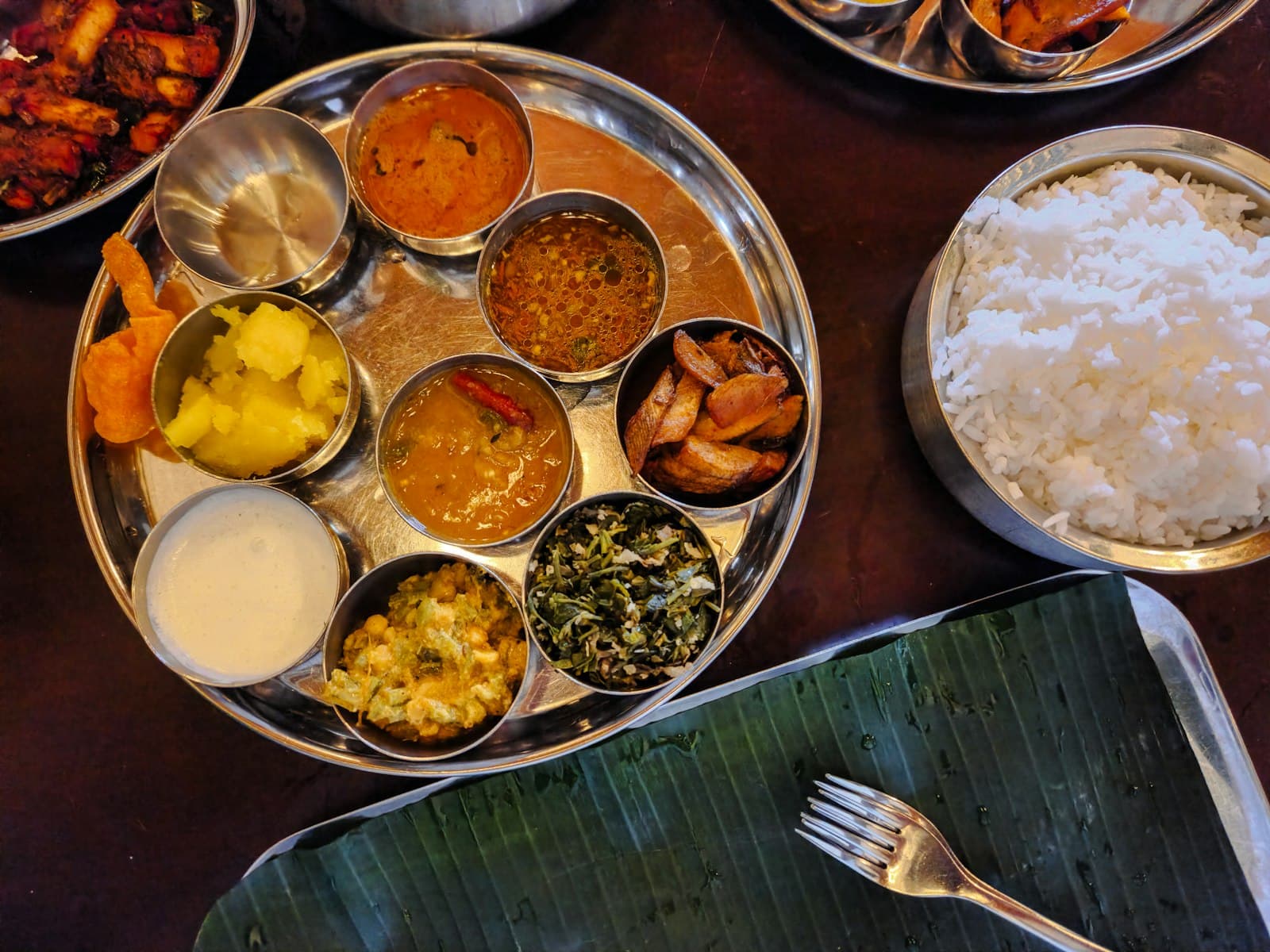
Photo by Zoshua Colah / Unsplash